Sisu
The Dark Comes Early
There is a particular kind of dark that settles over the north in December, and it is not the dark of nighttime so much as the dark of a day that just gave up and went home. By 4:30 in the afternoon, Helsinki had already given up its light. We arrived at a city the color of wet slate and streetlamps, the kind of darkness that makes you check your watch twice because your body refuses to believe it.
Six hours of daylight. That is what a Finnish December gives you. But you do not come here for the sun.
We came to the Helsinki Christmas market needing something. If you read about our climb up Toompea Hill a few days before, you know the Baltics had been busy teaching us lessons we hadn’t asked for. Tallinn was beautiful and Tallinn nearly broke us, so we came to Helsinki hopeful. A little wary. Ready to try again.
Sisu
The Finns have a word the rest of us don’t quite have. Sisu. It doesn’t translate exactly… it lands somewhere between grit, stubbornness, and a refusal to break that arrives when breaking would be reasonable.
They earned the word honestly. In the winter of 1939 the Soviet Union came across the border expecting a short walk, and Finland, outnumbered in men, in tanks, in everything that is supposed to decide these things, held out. Through the snow and the dark and the cold, they held long enough to keep their independence when so many of their neighbors did not. I had stood in Tallinn days earlier, in a country the Soviets did swallow, and felt how thin the line is between the nations that get to stay themselves and the ones that don’t. Estonia resisted with banned songs and a human chain four hundred miles long. Finland resisted with a rifle in the snow. Different flavor.
They resisted, humiliating the Russians time after time… and would have maintained their resistance had they not been wildly outnumbered. And the Finns built a whole country out of that. I was hauling two tired boys across a continent that owed them nothing, and I thought about the that word, however wide the gap was between the application.
The Glögi Line
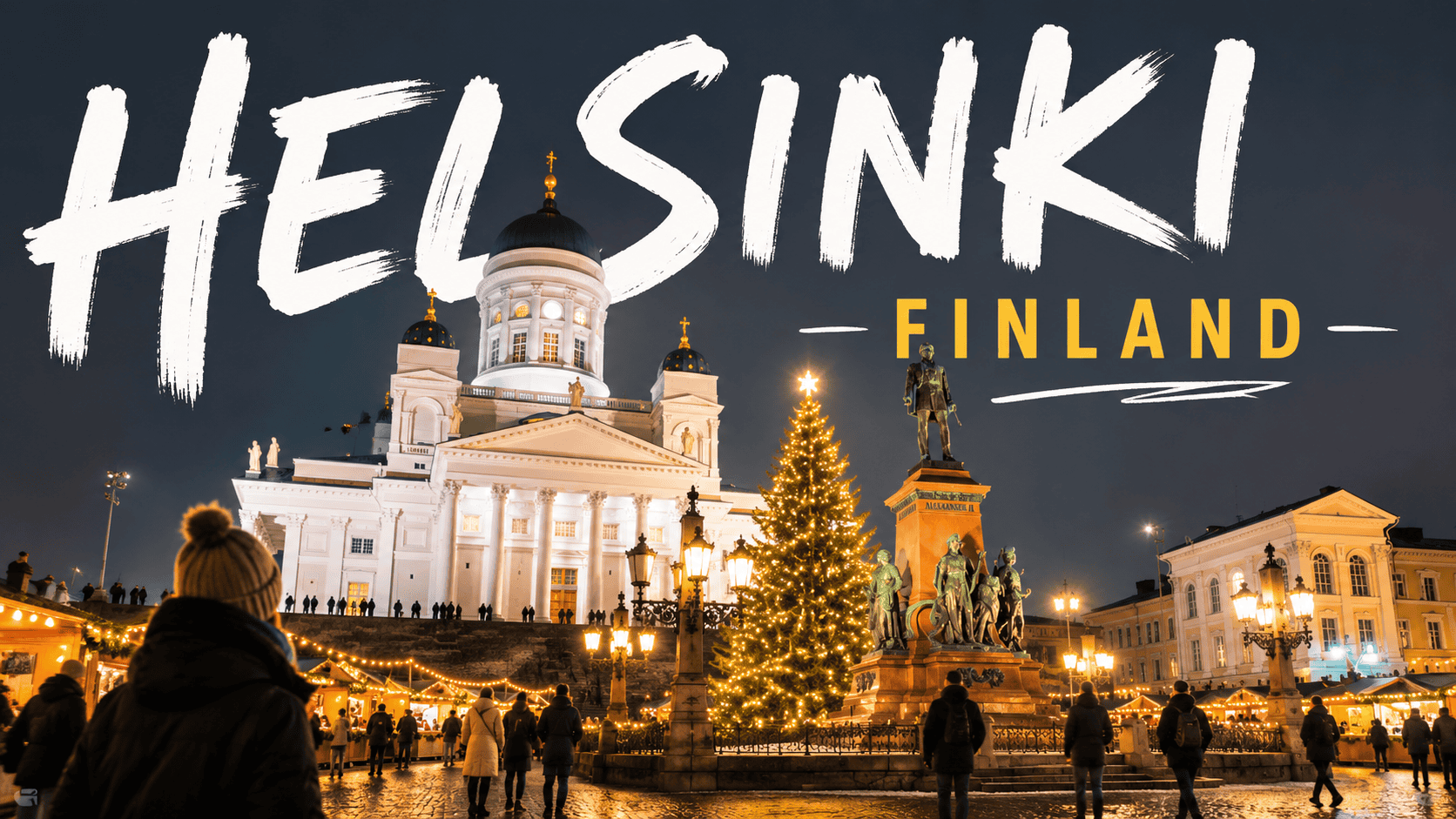
We had come for a market – a stop on the way north. Somewhere in the city, people swore, was a glögi worth standing in line for, the best, they said, in all of Europe. Glögi, if you’ve never had it cup, is the Finnish answer to the long night: mulled and spiced wine warm enough to feel in your chest, raisins and almonds at the bottom like a small reward for finishing.
And then it began to snow.
Not a storm. The good kind. Fat flakes drifting down through the warm light of the market, settling on wooden stalls and wool hats and the shoulders of all the strangers, turning an ordinary square into something a set designer would have been accused of overdoing. The smell of sautéed reindeer hung in the cold. Everywhere you looked there was reindeer. And not the kind from the Christmas books.
I looked over at the boys. And the boys were fine mostly.
After Tallinn, after the tears and the bribes and the stairway that would not end, fine was a state of being I’d begun to doubt we’d reach. We had come a long, hard way to do nothing more than stand still in a snowfall. So we stood still in the snowfall.
North
There was a train the next day. It ran up through the dark toward Rovaniemi, toward the Arctic Circle, toward a cold and isolation we thought would make Helsinki seem like a global metropolis.
But I found I was not dreading it the way I might have a few days ago based on the lack of the kids’ ability to get along or listen to a single word coming from mom and dad’s mouth. But somewhere between Tallinn and here there is a word the Finns already have, and I don’t expect my sons to understand it for years. That’s all right. Some lessons you carry a long time before you know their names.
So we got on the train. The four of us. And pointed ourselves north into the dark.