
From a name and a year, a film.
One family came to us with almost nothing — a name, a date, a place on a map. This is the film we made together, and the whole journey of how we made it.
A Vida Colorado Legacy Film · Bodkovce → Ohio · 1912Most families don’t have a tidy archive. They have fragments — a name half-remembered, a year, a story about someone who left and didn’t come back. That’s enough to begin. Here is one film, from the first email to the final frame.
All they had was this.
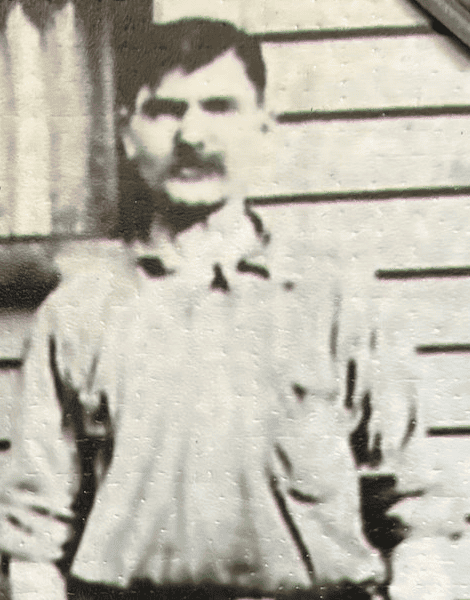
When the family first reached out, they weren’t sure they had enough for a film at all. Almost everything they knew about their great-grandfather fit on a single page — and into one photograph.
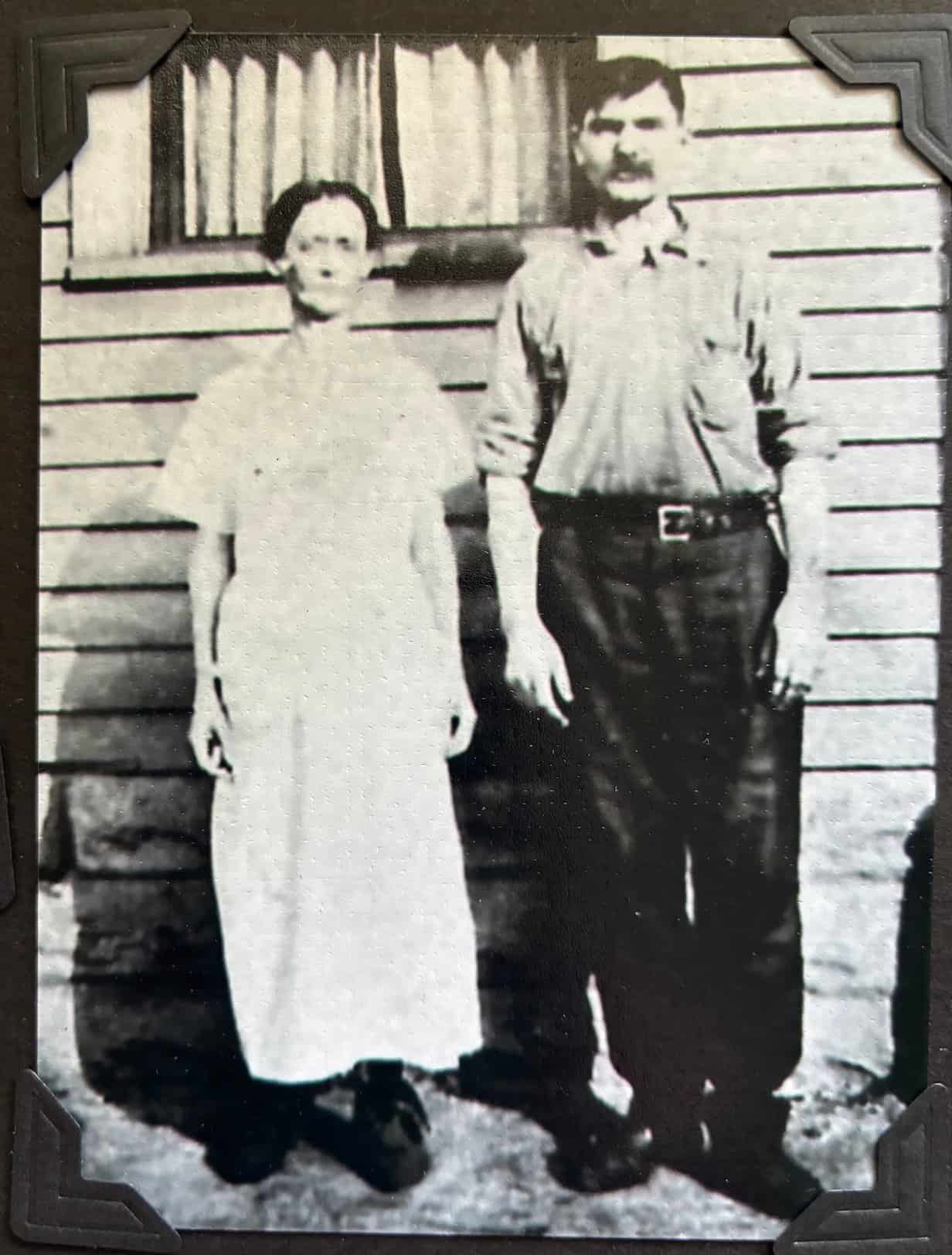
the family kept. [ c. 1920 ]
This was, more or less, everything they had:
“Born on March 19, 1882 in Bodkovce, Slovakia Hungary and set sail to the US via the George Washington on 2/10/1912 (my birthday!) arriving in NYC on 2/22/1912, with his final destination of Youngstown, Ohio, but he went to Cleveland. Cleveland has a very large Middle European community. He left behind his wife and 3 boys (8, 4, and one born 5 months after he left), They arrived a few years later, and my grandfather, the 4th son, was 1st generation. ” — [ Amy / Great Granddaughter]
One photograph. No letters, no recordings.
Just that face, a handful of facts — and the feeling that a story was slipping away.
Then they chose the feeling.
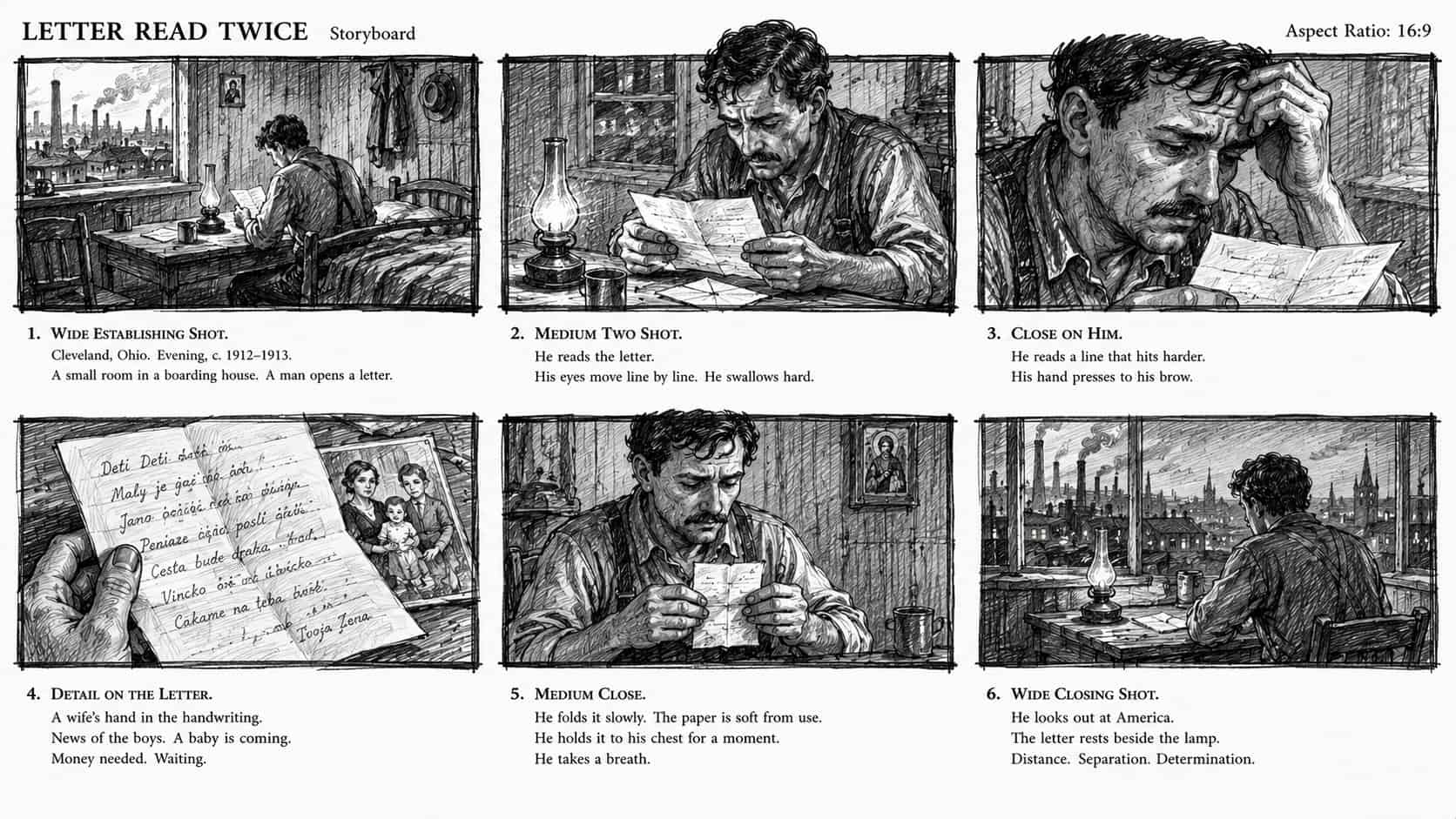
Before a single frame is made, the family decides which moment to live inside. We sketched four directions from his life – the last meal at home, the clerk’s desk where he became a line on a form, the ship heading west, a letter read alone in Ohio – and they chose the one that felt most like him. This is the step that makes the film theirs, not ours.
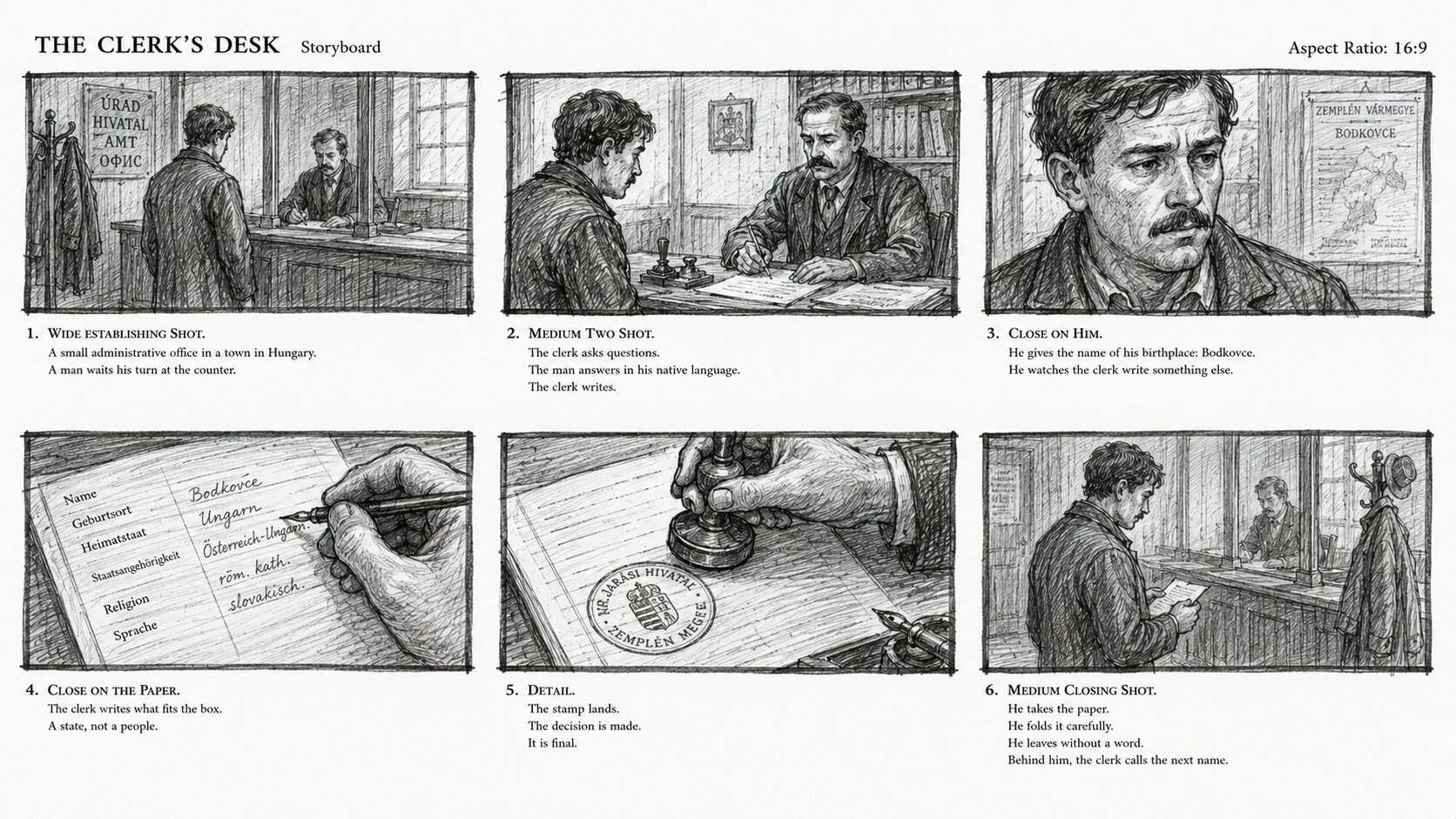
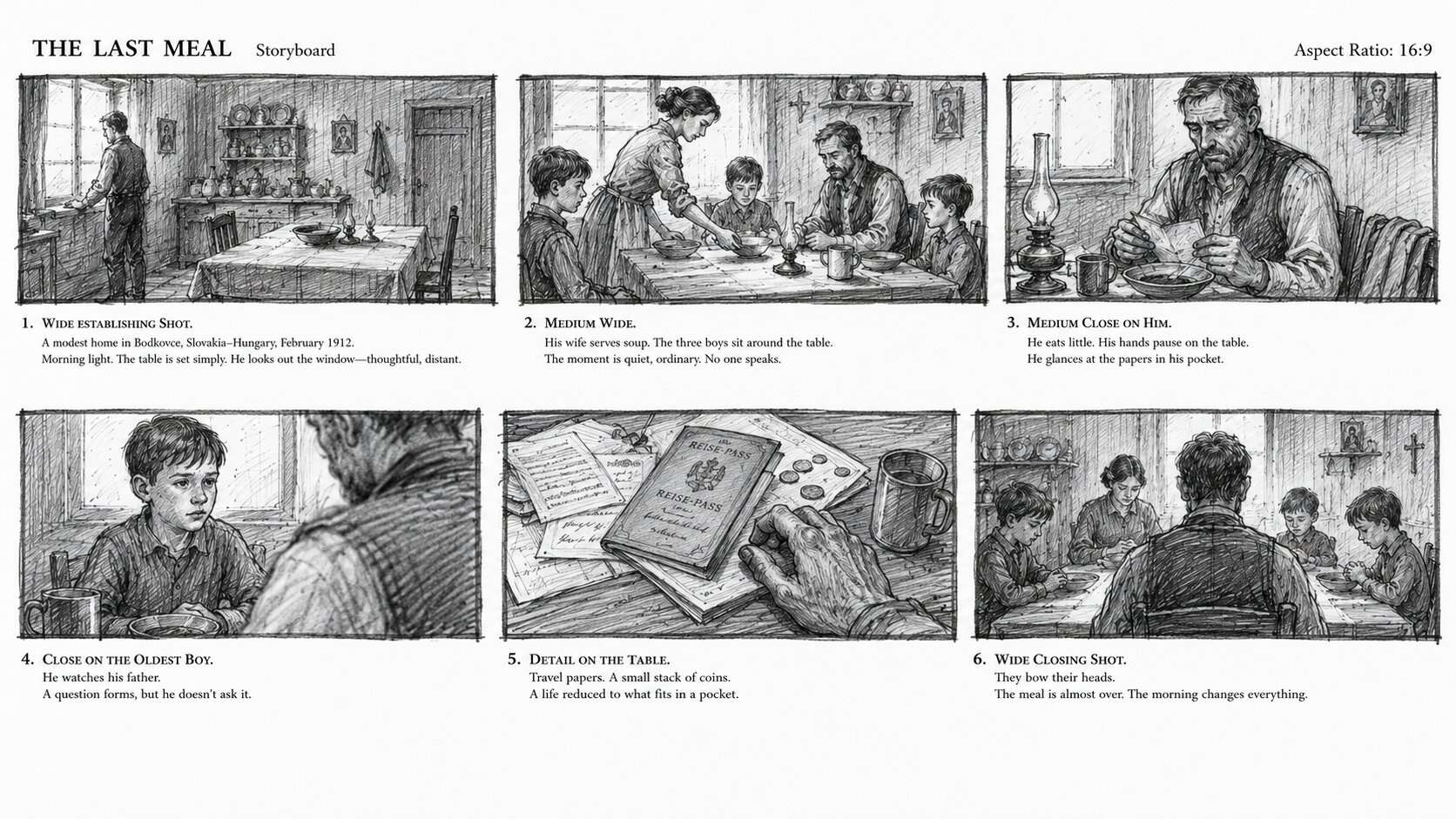
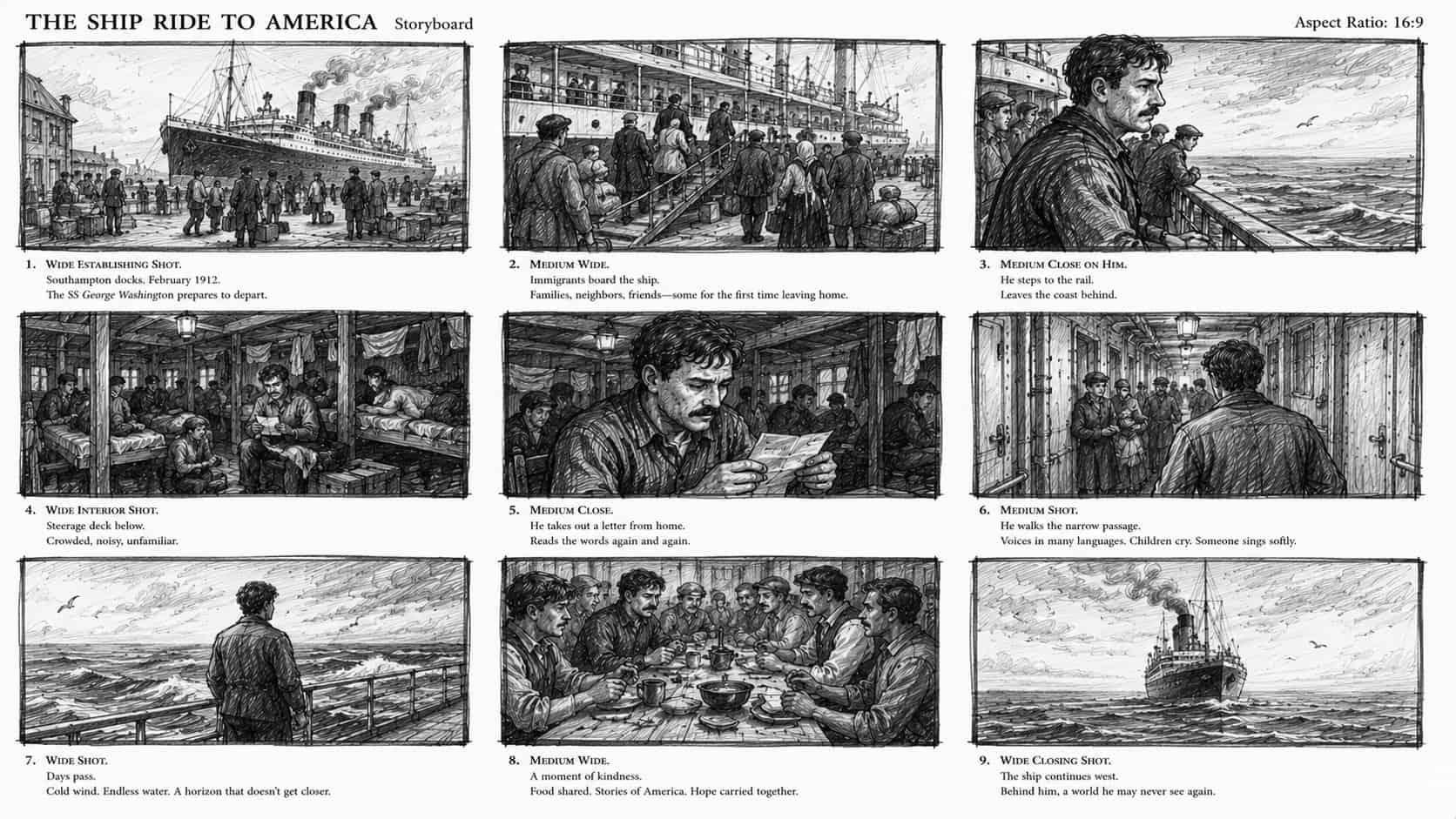
The family chose “The Clerk’s Desk” – the quiet morning a man’s whole identity is reduced to boxes on a form. A state, not a people. The other three directions wait, ready to become films of their own.
And this is what they keep.
Ninety seconds. A muddy road, a village, an emigration office, a stamp, a doorway — and a life that branches into twenty-two people who are alive because he left.
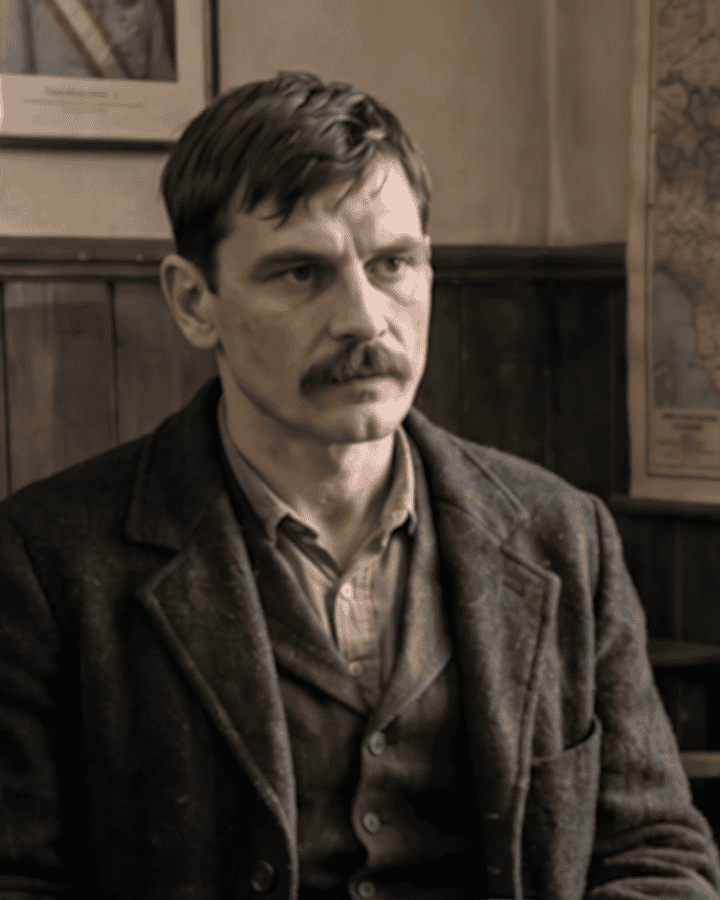
From one faded photograph and a handful of facts, we rebuilt the morning he walked out the door.
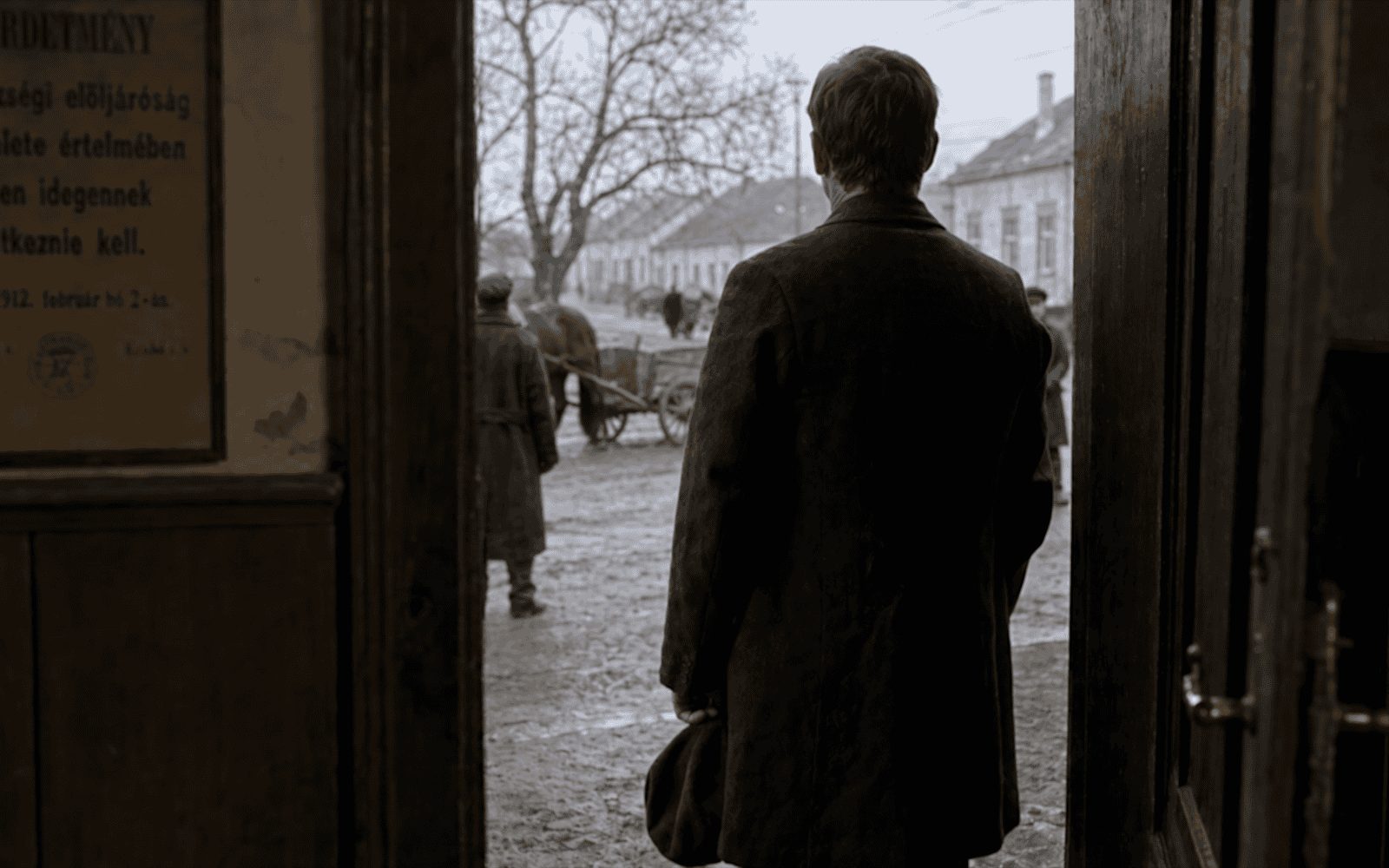
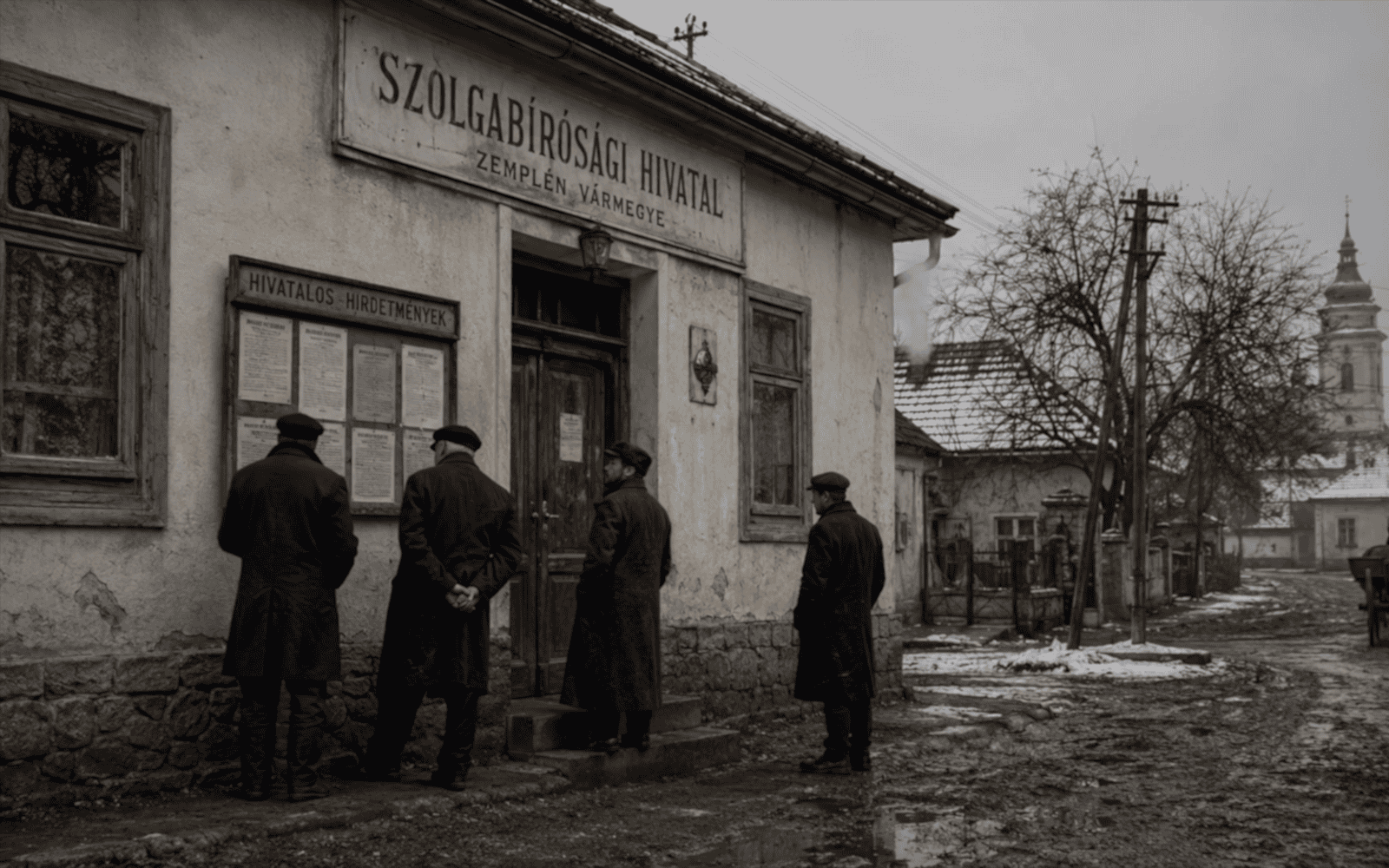
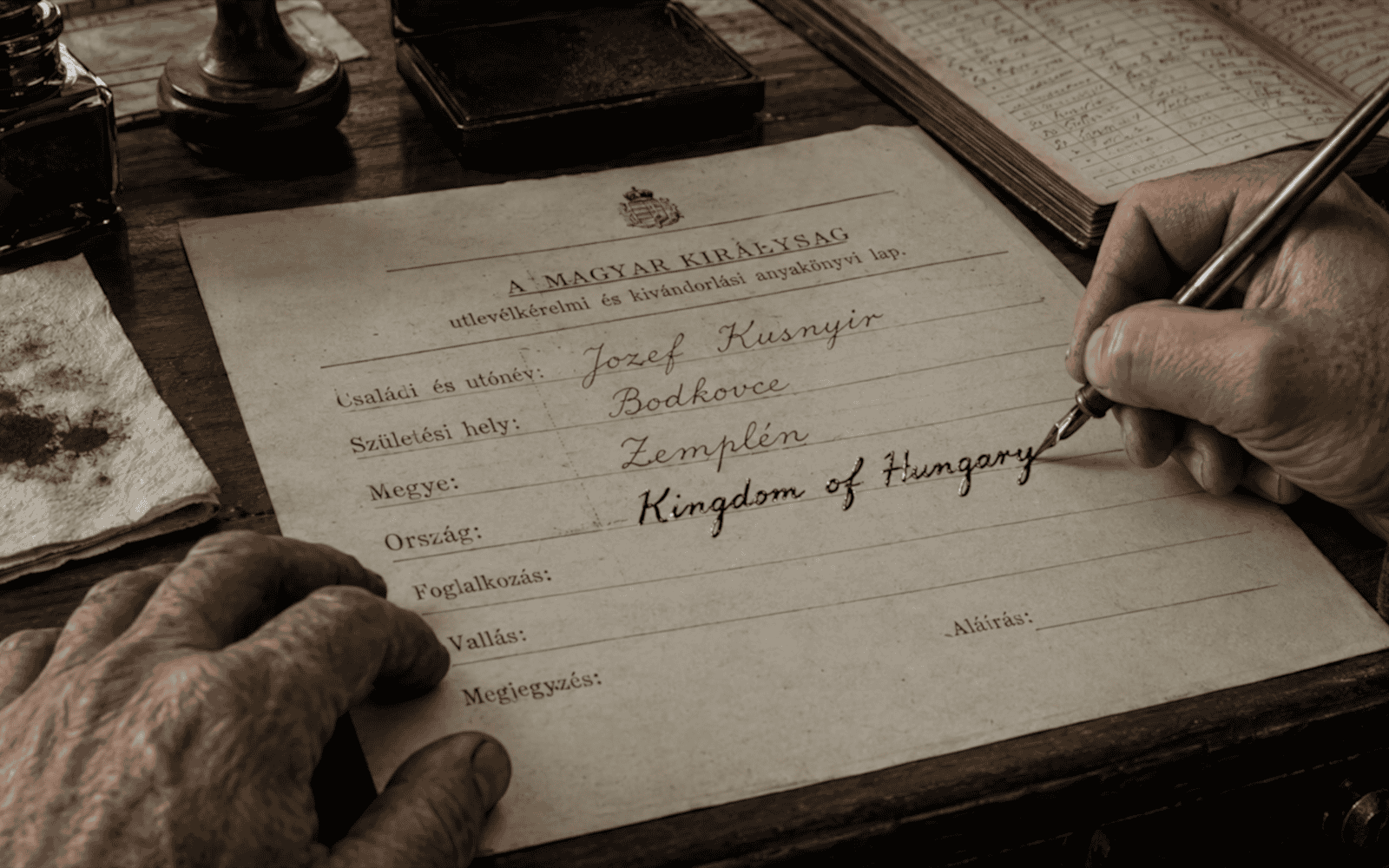
The details were researched, not guessed.
Bodkovce sat in Zemplén county of the old Kingdom of Hungary. The office signage, the emigration form, the notice nailed to the wall – all built in accurate period Hungarian. The mills of Ohio drew thousands of families exactly like his in those years. Working from the single photograph that survived, we anchored his real face – then reconstructed the world around it, carefully, so his descendants could stand inside it for ninety seconds.
That’s the difference between a generated clip and a legacy film: the research, the pacing, the restraint, and a hundred small decisions made in service of one family’s memory.
AI is a production tool here, not the author. The heart of the film is the family’s story – their facts, their choices, their one photograph. Where memory has gaps and the archive runs thin, we use AI to give those fragments a place and a motion, always faithful to the real source and the direction the family chose.
I wasn’t sure where to start with telling my ancestors’ story, as I didn’t have a lot of information. Kurt gave me several options to build my great-grandfather’s story that helped me decide to ‘begin at the beginning’ of his journey to America. What Kurt was able to generate from an old, grainy photograph was remarkable. I can actually see the family resemblance in the image he created. During the whole process, Kurt responded quickly, listened to my suggestions, and his knowledge of history added to a positive experience. The end result exceeded my expectations, and truly captured the emotion my great-grandfather must have been feeling on that day. I can’t wait to share this with my family.
Whose story are you about to lose?
You don’t need an archive. A few facts, a name, and a memory are enough to begin.
Start your family’s film